Interaction design · VR prototyping
The Mark of Zorro.
A literary VR prototype based on the character of Zorro.
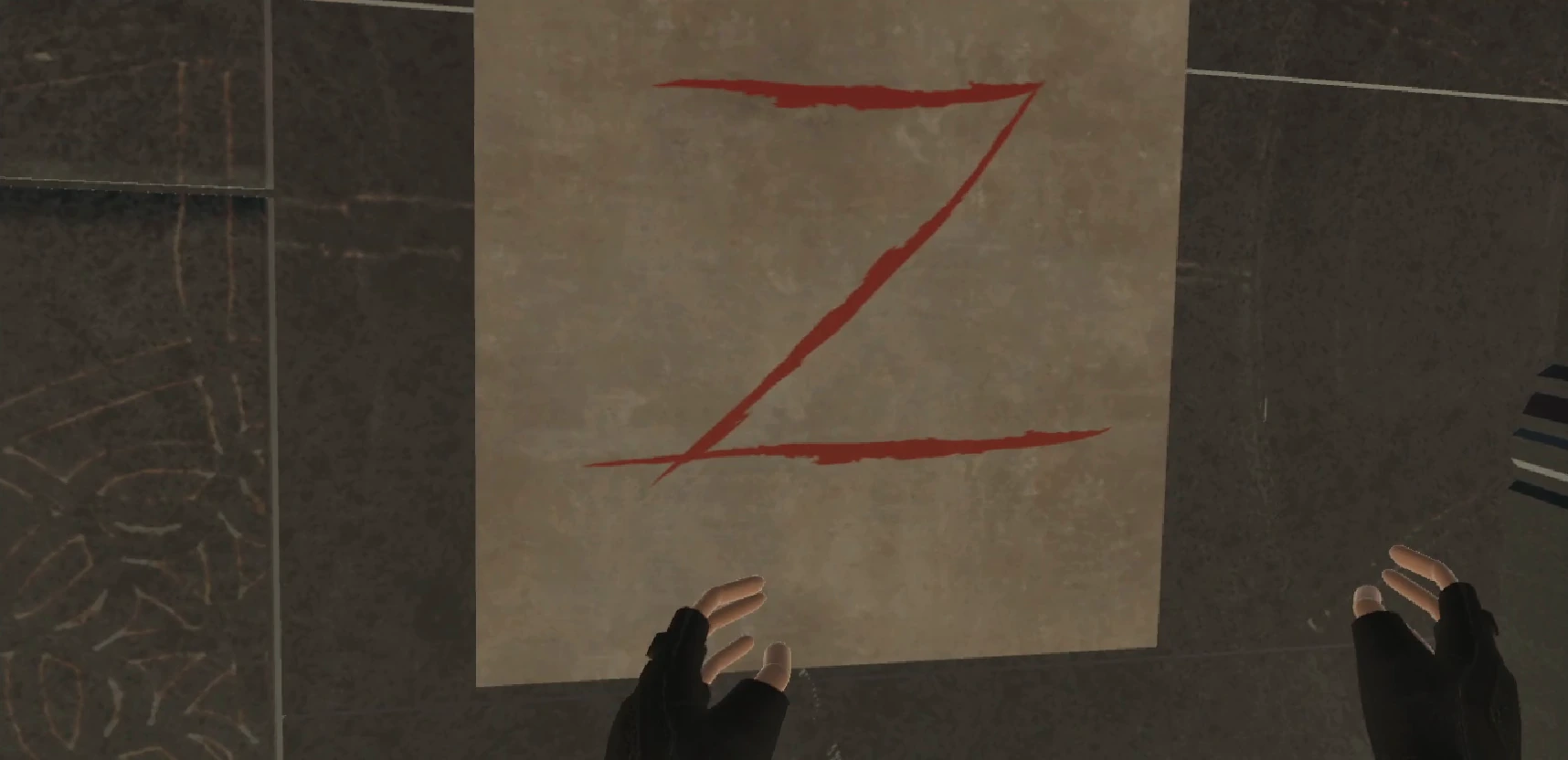
01 · The prototype
Project brief and my contribution
For my MSc virtual reality assignment, I was asked to create an experience around a public-domain literary character. I chose Zorro, introduced in Johnston McCulley’s The Curse of Capistrano (1919), and developed a short, single-player prototype in Unity. The costume, setting and mentor–successor premise also drew on film adaptations.
I planned the player’s route, designed and implemented the interactions, and connected them through progression logic. The player climbs into a hacienda, finds a hidden passage, trains with a rapier, equips the costume and completes the Z gesture. I revised the prototype through informal headset testing and lecturer feedback.
Read the video description
- 0:00 · Climbing
The player grips the cliffside rocks and overhead support to climb towards the hacienda.
- 0:08 · Window entry
A nearby pot is used to break the window and enter the building.
- 0:15 · Hidden passage
A hidden button activates the fireplace mechanism, revealing a passage.
- 0:25 · Sword training
The rapier strikes a training target and a cut section detaches.
- 0:32 · Costume selection
The player selects costume items in the suit-up room, with a mirror nearby.
- 0:41 · Z gesture
The sword gesture reveals the strokes of a red Z in sequence.
- 0:48 · Ending options
The ending presents Restart and Free roam options.
02 · Orientation
Revising the starting sequence
Informal testing showed that the original starting location left players without enough context about their character, location or purpose. When I moved the start to a balcony, lecturer feedback raised another question: how had the player arrived there?
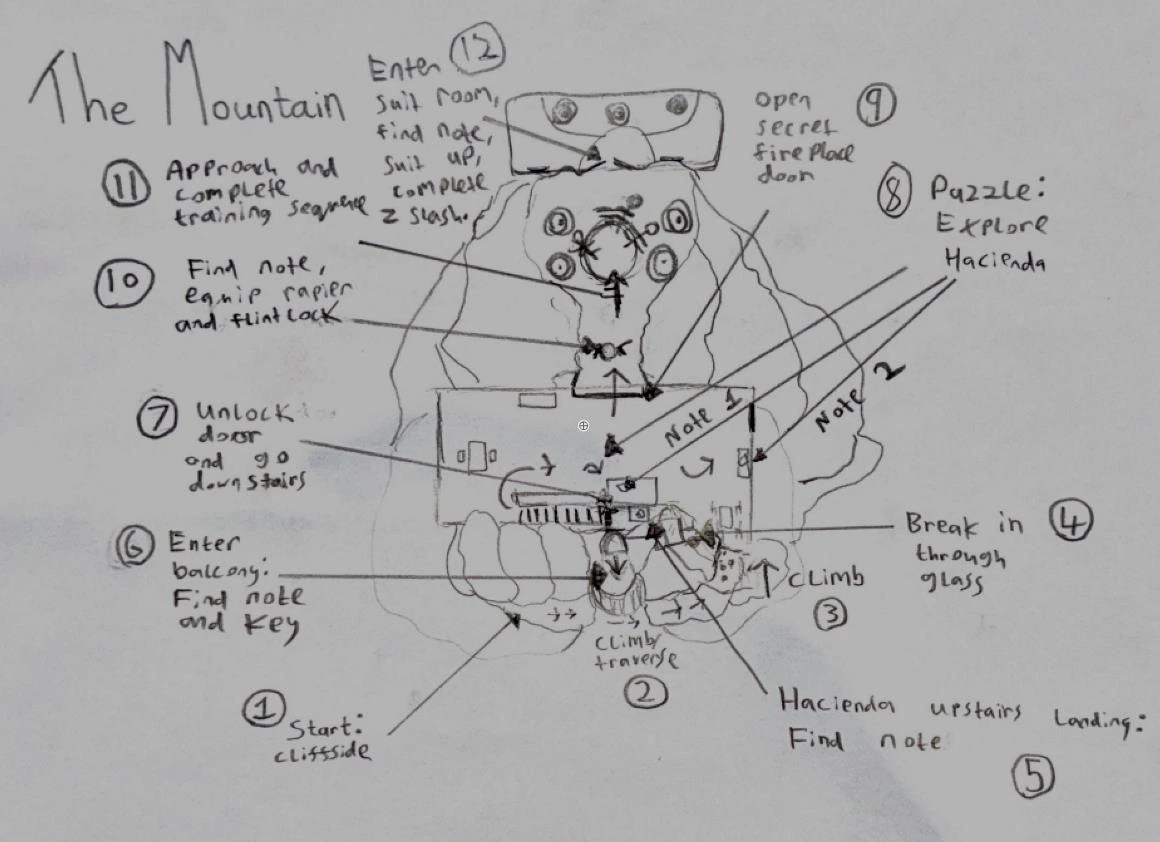
I redesigned the opening as a cliffside climb followed by a window break-in, so entering the hacienda became part of the experience. I used an annotated route map to plan the sequence from arrival to exploration, training and costume selection. These changes responded to feedback; I did not formally measure whether the revised opening improved understanding.
03 · Interaction decisions
Implementing the physical interactions
I adjusted how the prototype detects sword contact, responds to the hidden button and handles the cape. These decisions addressed interactions that were too precise or difficult to implement reliably in VR.
- Sword collision and progression
- I enlarged the rapier’s collider, the area used to detect contact, to make hits easier to register. Target movement, impact audio and haptic feedback confirm a hit. I separated required training targets from optional objects so optional interactions would not block progression.
- Fireplace mechanism
- I connected the hidden button to the fireplace animations, mechanical sound and haptic feedback. Pressing it moves the fireplace and reveals the passage to the training area.
- Cape implementation
- I used a visibility switch between the displayed cape and a version positioned on the player. This provided a practical way to equip it without implementing a full physical cloth transfer.
04 · Feedback
Detecting the Z gesture
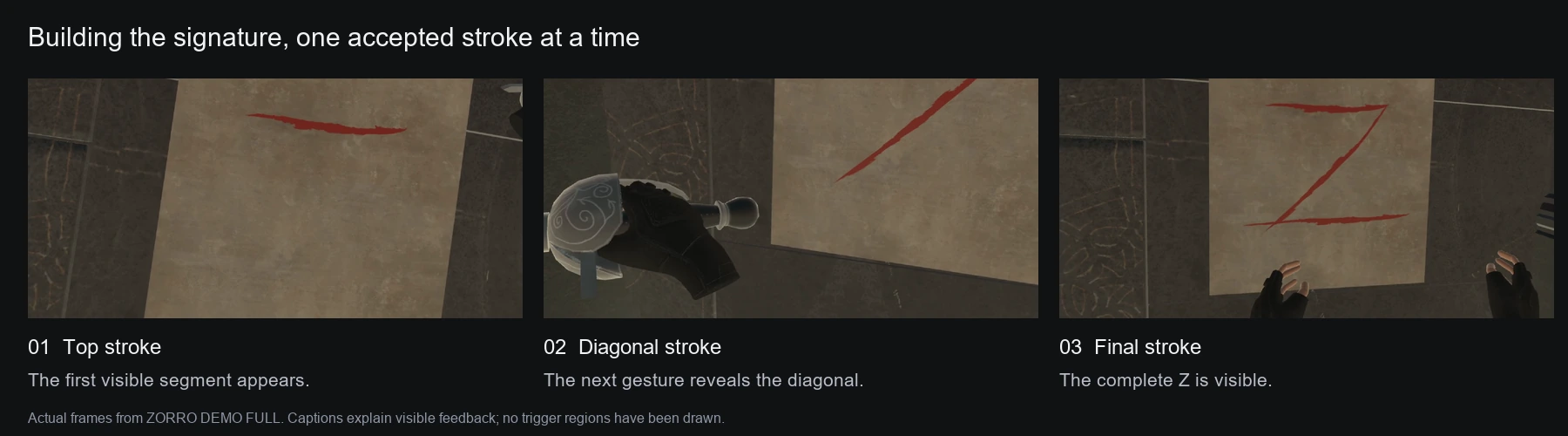
I implemented the final sword gesture using ordered trigger zones for the top stroke, diagonal and bottom stroke. Each completed stage reveals part of the Z and produces sound and haptic feedback. Completing the sequence starts the ending.
This detects a predefined sequence of movements, not arbitrary freehand drawing. Showing each accepted stroke gives the player visible confirmation of which part has registered.
05 · Outcome & reflection
Completed work and further testing
I completed a playable academic prototype with a connected route, object interactions, feedback and an ending. The work gave me experience implementing interaction designs in Unity and revising detection rules and object behaviour when the original approach was unreliable.
The next step would be structured testing with first-time players: can they understand the route, reach and activate the key interactions, and remain comfortable? I would also test performance across hardware earlier to identify constraints before adding further detail.
I designed the interactions and integrated the prototype in Unity, adapting third-party assets and using tutorials and AI assistance during development. The project used informal testing and lecturer critique; it does not establish measured usability improvements.